
Different Types of Acne
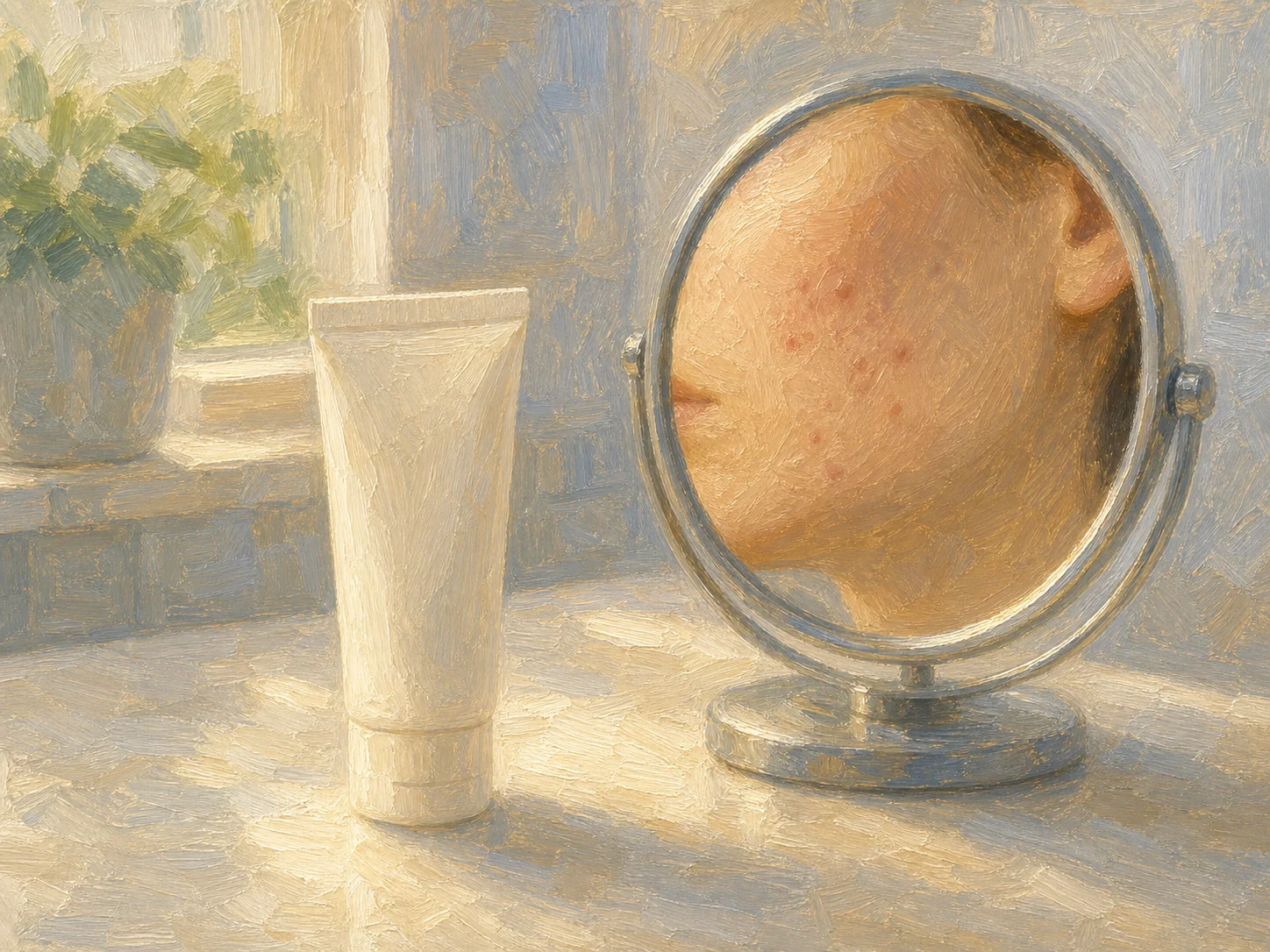
Acne shows up in several forms, and each one needs a different treatment. Knowing what you have is the first step:
- Blackheads (open comedones): Small dark spots that form when pores get clogged with oil and dead skin cells. The dark colour is oxidation of the trapped material, not dirt. Blackheads usually aren't inflamed and respond to topical retinoids or salicylic acid.
- Whiteheads (closed comedones): Same root cause as blackheads, but the pore stays closed, so the bump looks white. Treated with retinoids to unclog the pore.
- Papules: Small red bumps caused by inflammation when bacteria infect a clogged pore. They usually need a topical retinoid plus an anti-inflammatory like benzoyl peroxide or an antibiotic.
- Pustules: Red, inflamed lesions with a yellow or white pus-filled centre. Treatment is similar to papules, sometimes with an added antibiotic for more severe cases.
- Nodules: Large, painful lumps below the skin surface. More severe than papules or pustules, and can scar. Oral antibiotics or oral isotretinoin may be needed.
- Cysts: The most severe form. Large, pus-filled lumps beneath the skin. Painful, scar easily, and usually need oral isotretinoin from a specialist.
Once you know which type you have, the treatment plan gets a lot more obvious.
How Does TeleTest Approach Acne Treatment?
Tretinoin
Tretinoin (retinoic acid) is the most effective retinoid for acne and skin aging. It's prescription-only in Canada, so you won't find it in over-the-counter products. Retinol, the common cosmeceutical version, is about 10 times weaker than tretinoin. As a rough guide, 0.25% retinol is roughly equivalent to 0.025% tretinoin. Cosmetic products cap retinol at 0.3% for safety.
How long treatment takes
Acne treatment rewards consistency. We start at the lowest strength to keep side effects down, then stick with the routine for 8 to 12 weeks before stepping up or switching. That window gives the medication enough time to show what it can do.
Mild Acne: Starting Simple
For mild acne, which is mostly blackheads and whiteheads, we start with a topical retinoid. It treats what's there and prevents new breakouts.
Common starting options:
- Tretinoin 0.025% to 0.05%: Apply once daily at bedtime.
- Tazorac (Arazlo) 0.045%: Apply once daily at bedtime.
For long-term upkeep, a topical retinoid like tretinoin can be used daily.
Mild to Moderate Acne: Combination Therapy
If acne moves up to mild-to-moderate with inflammatory papules and pustules (red bumps), the next step is a topical retinoid combined with benzoyl peroxide (BPO).
Examples:
- TactuPump: Apply once daily at bedtime.
- Epiduo: Apply once daily at bedtime.
Maintenance: Continue the topical retinoid, or stay on the retinoid plus BPO combo.
Moderate Acne: Stepping Up
For moderate acne with red bumps and firmer nodules, we add a gel-based antibiotic with BPO in the morning, then a retinoid at night.
Examples:
- Benzaclin (clindamycin with BPO): Apply in the morning.
- Tretinoin or adapalene: Apply at bedtime.
If nodules are present, we may add an oral antibiotic such as doxycycline for up to 90 days to bring inflammation down and limit bacterial resistance.
Severe Acne: Specialist Referral
If you have severe acne with widespread nodules, papules, and pustules, you'll want to see a dermatologist for oral isotretinoin. TeleTest physicians don't prescribe isotretinoin, but we can refer you to a specialist who does.
Back Acne
For moderate back acne, we use a prescription wash and sometimes an oral antibiotic.
Examples:
- BPO 10% body wash: Use once daily for 90 days.
- Doxycycline 100 mg: Take once daily for 90 days.
Skin Care Alongside Treatment
A simple routine helps. Use a mild, non-comedogenic cleanser to wash off oil and dirt without irritating your skin.
Setting Expectations
Acne treatment is rarely a quick fix. Over-the-counter products can help in the short term, but prescription treatments backed by clinical trials do the real work over months. We'll walk you through the plan and adjust as needed.
Disclaimer: This blog post is intended for educational purposes only and should not be taken as medical advice. Always consult your healthcare provider for personal health concerns.
Dermatology Consultations
Acne, anti-aging, and skin-care treatment from licensed Canadian physicians.
See dermatology options →