
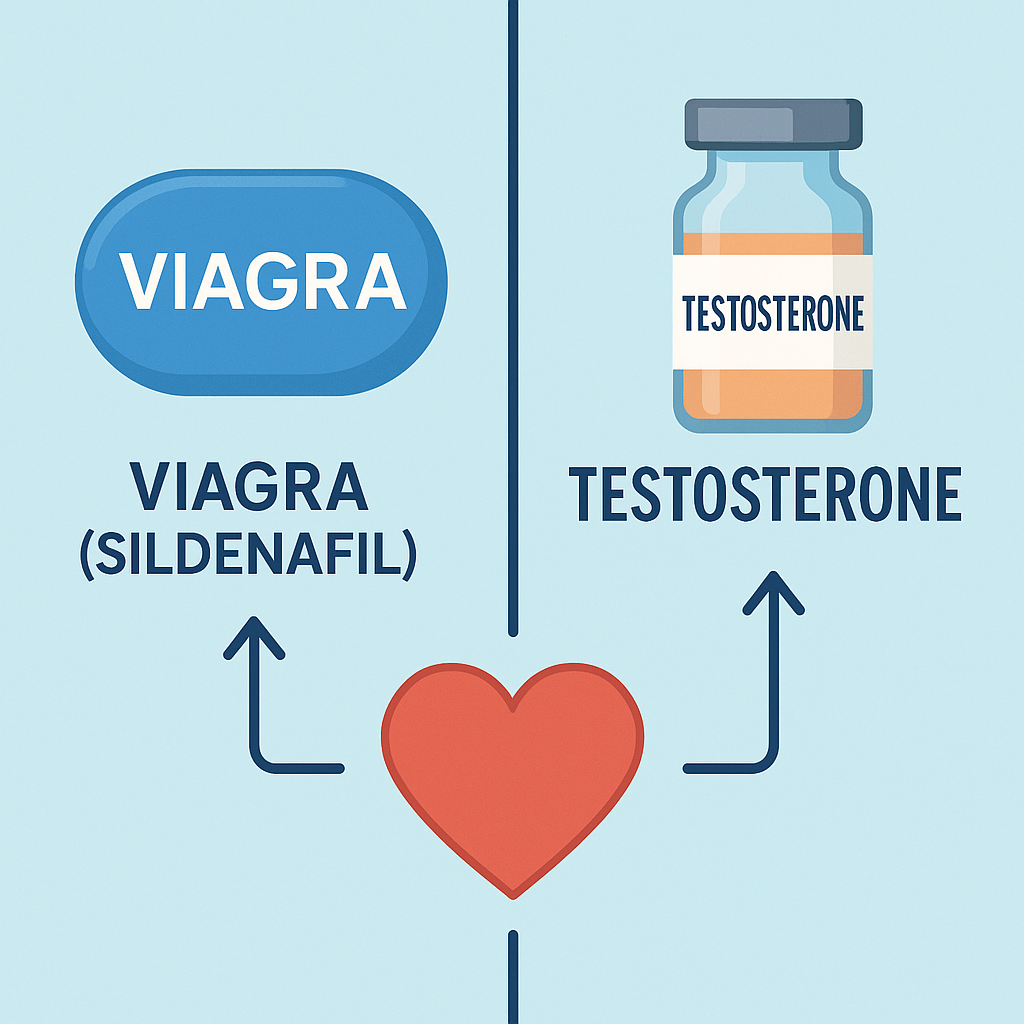
Why ED Medications Sometimes Fall Short
Medications like Viagra (sildenafil) and Cialis (tadalafil) are PDE5 inhibitors. They work by enhancing the nitric oxide signalling pathway that relaxes smooth muscle in the penis, allowing blood to flow in and produce an erection. But this pathway depends on adequate testosterone levels to function properly.
Testosterone stimulates the production of nitric oxide synthase — the enzyme that kicks off the entire erection cascade. In men with low testosterone (total T below 10 nmol/L or free T below 180 pmol/L), the nitric oxide system is blunted. PDE5 inhibitors can only enhance a signal that already exists; they cannot create one from scratch.
The Evidence for Combination Therapy
Several studies have investigated what happens when testosterone replacement therapy (TRT) is added to PDE5 inhibitors in men who did not respond to ED medications alone:
- A 2005 randomized controlled trial by Shabsigh et al. found that men with low testosterone who failed sildenafil alone showed significant improvement in erectile function scores when testosterone gel was added. The International Index of Erectile Function (IIEF) scores improved by a mean of 4.4 points in the combination group versus no improvement with sildenafil alone.
- A meta-analysis by Isidori et al. (2005) across 17 trials confirmed that testosterone therapy improves erectile function, with the strongest effects seen in men with the lowest baseline testosterone levels.
- A 2012 study by Spitzer et al. demonstrated that testosterone supplementation in hypogonadal men improved the response to PDE5 inhibitors across measures of erection quality, orgasm, and overall satisfaction.
The benefit is strongest in men with confirmed hypogonadism (clinically low testosterone with symptoms). Men with testosterone in the normal range are unlikely to see improvement from adding TRT.
Who Should Consider Testing?
Consider checking your testosterone levels if you:
- Have tried Viagra or Cialis at the maximum recommended dose without adequate results
- Experience other symptoms of low testosterone: fatigue, reduced muscle mass, low libido, mood changes, or increased body fat
- Are over 40 — testosterone declines approximately 1-2% per year after age 30
- Use anabolic steroids or have in the past (exogenous steroids suppress natural testosterone production)
A simple blood test measuring total testosterone and free testosterone can identify whether low T is contributing to your ED. Testing should be done in the morning (before 10 AM), when testosterone levels peak.
Important Considerations
- TRT is not for everyone. Testosterone therapy can affect fertility by suppressing sperm production. Men planning to conceive should discuss alternatives like clomiphene citrate with their provider.
- Monitoring is required. TRT requires regular blood work to monitor testosterone levels, hematocrit (red blood cell concentration), PSA (prostate-specific antigen), and liver function.
- Lifestyle factors matter. Sleep, exercise, stress management, and maintaining a healthy weight all influence testosterone levels and may improve ED independently.
Next Steps
If you’ve tried ED medication without success, checking your testosterone is a logical next step. TeleTest offers convenient online testosterone testing — complete a 5-minute intake, get your requisition, and visit a lab near you. Results are typically available within days.
Disclaimer: This blog post is intended for educational purposes only and should not be taken as medical advice. Always consult your healthcare provider for personal health concerns.